Foraging for wild food is a brilliant way to get outside and interacting with our natural environment, and over the next few weeks nature’s larder will explode in an abundance of new growth as our wild plants establish themselves for another year. If you look closely while out for a walk you’ll find plenty of wild edibles already growing well in sheltered spots. This week we have found Sorrel, Cleavers (sticky weed) and Nettles in our hedgerows, all edible and highly nutritious wild leaves, as well as the beautiful Gorse flowers shown below which was considered to be the herb of love by our Anglo-Saxon ancestors.

A quick summary of the legality of foraging in the UK…
- It is illegal to uproot ANY wild plant without permission
- It is illegal to disturb or collect plant material from any PROTECTED wild plant
- It is illegal to trespass, so you must gain permission before foraging on private land
It is also essential that you only eat wild plants that you can 100% positively identify, and that you have foraged from land which is free from contaminants – in other words away from areas which are popular with dog walkers, or where pesticides may have been used.
There are endless ways that you can introduce wild food into your recipes. Try using edible spring shoots in soups, quiches, pesto or just thrown into a salad. If you are foraging with kids the 3 recipes shown below are favourites of mine…
Dandelion and Lemon Biscuits
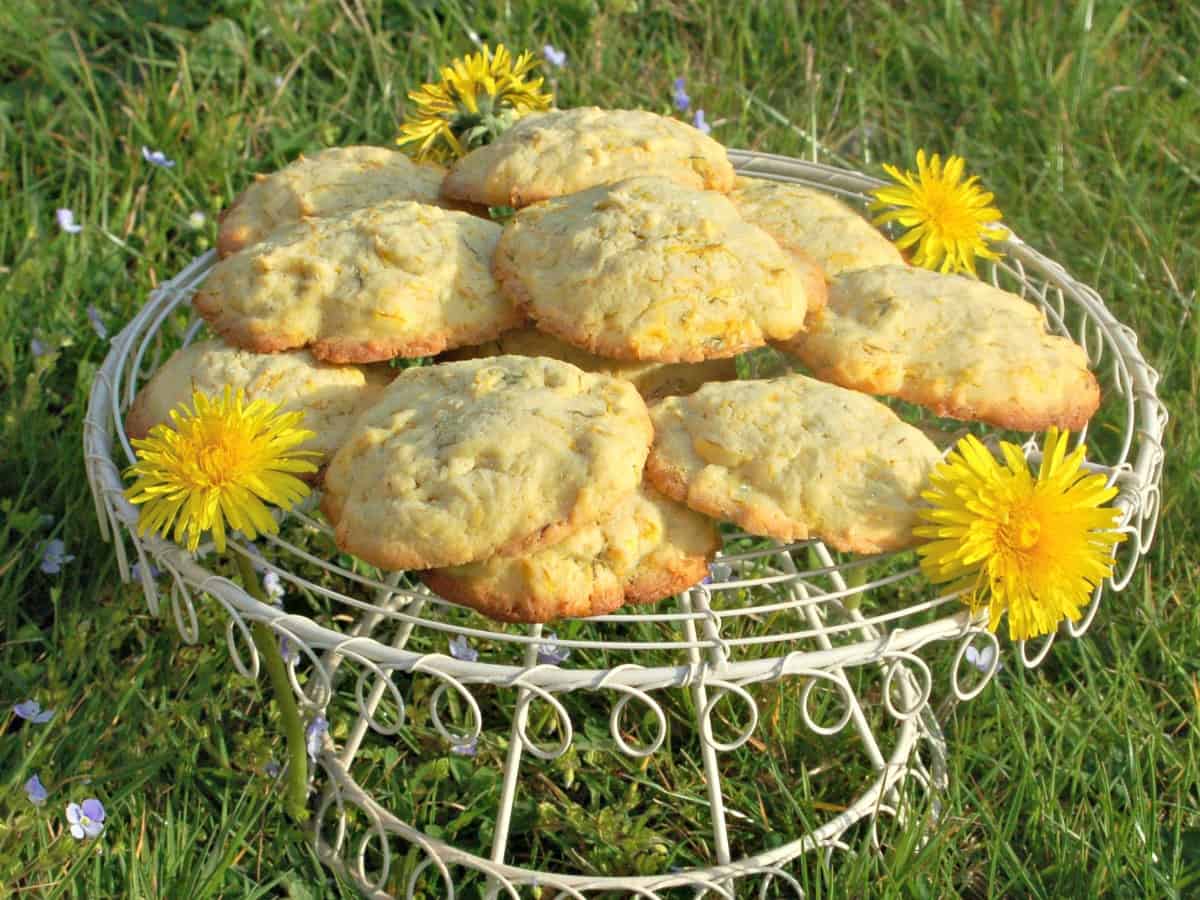
There’s a whole host of recipes that use the dandelion flower; teas, wines, salads and savouries. The plant is recognised as being one of our most nutritious weeds; containing anti-oxidant vitamins, minerals, calcium, and protein, and would have been a food staple for our ancestors here in Europe. Why not try our beautifully simple Dandelion and Lemon biscuits for a sunny introduction to this wonderful weed!
Dandelions are one of the easiest wild flowers to identify, so are a perfect place to start if you want to cook with wild food. Get out and forage some today and try our wonderful Dandelion and Lemon Biscuits recipe.
Stinging Nettle Cordial

Google the health benefits of stinging nettles, and you will find the most incredible list of diseases and complaints that this plant has been attributed to helping with, everything from hay-fever and arthritis, to supporting menopause and detoxifying the body. Of course many of the claims are anecdotal, but there is also some robust research out there that backs up some of the suggested benefits.
Nettles are found across much of the world, and archaeological evidence here in the UK has shown the we have used the plant since prehistoric times, with ‘Nettle Pudding’ laying claim to being Britain’s oldest recipe. Nettles are certainly nutritionally dense, containing a wide range of vitamins and minerals, as well as good amounts of protein and fibre.
Click here for instructions on how to make this delicious and simple cordial.
Stinging Nettle, Apple and Pear Fruit Leather

This recipe is one of my own concoctions and the idea came to me while pondering on what I could do with the nettle residue you are left with, when making the Stinging Nettle Cordial featured above. If you dont want to make the cordial first, this recipe works just as well with freshly picked nettles, or you could substitute an edible wild plant of your own choice.
Nettles are hugely nutritious, with all sorts of health benefits, so I am delighted to have come up with this recipe for Stinging Nettle, Apple and Pear Fruit Leather, which the kids are so keen to eat.
I would love to know what you think of our early spring foraging recipes, and whether you are tempted to try any of them with your kids, so please do leave a comment below.

13 comments
[…] Last month we had some great posts linked up on the topic of Spring. Have you ever taken the kids foraging? Craft Invaders have some great recipes in Spring foraging recipes the kids will love. […]
Wow! You would never think of stinging nettle cordial! Great ideas! #LivingLinky
It’s got a beautiful taste – not at all how you would imagine. Let me know what you think if you try it Sarah :)
This is fantastic, I’m so glad I found it via the #vlogit Linky! I’m definitely gonna be having a go at the pies and leather straps, thank u for a great read.
Thanks Naomi. Please let us know how you get on when you try them :)
Loved this article, will get trying on these with my two kids. Can you recommend any events for foraging with kids? Thanks!
Thanks Midge. I am not aware of any events which are dedicated to only kids, but most bushcraft schools now offer introduction to foraging courses and cater for families :)
I love these ideas. I love the idea of foraging, but am always worried about poisoning someone! Even I could do this :-)
Thanks Lauren, we deliberately choose these plants because everyone knows them here in the UK and they are so easy to find :)
Love these Sarah, we are so lucky to stay in a country where foraging is a way of life for most people. your recipe for fruit leather has always been a favorite of mine and now there’s two more to try. We have dandelions, but no stinging nettle. Mmmmmmmm I wonder if there’s something else we could use instead.
I’d love to spend time with people who have kept their foraging knowledge intact within their community, it amazes me how much we have lost here. We are going to a 5 day bushcraft festival this summer and I cant wait to immerse myself in to all that precious knowledge!
I must say that the most dazzling one to me is the biscuits. Those look simply divine! The more I read about your foraging adventures, the more I want to go myself! There has to be someplace to forage where I live. I just have yet to find it yet. Although, I do have a foraging guide now. Baby steps! Also, any kind of homemade fruit leather is something from my wildest dreams. :)
We love the same things Gina and I’m sure you’ll find somewhere soon – then there’ll be no stopping you!